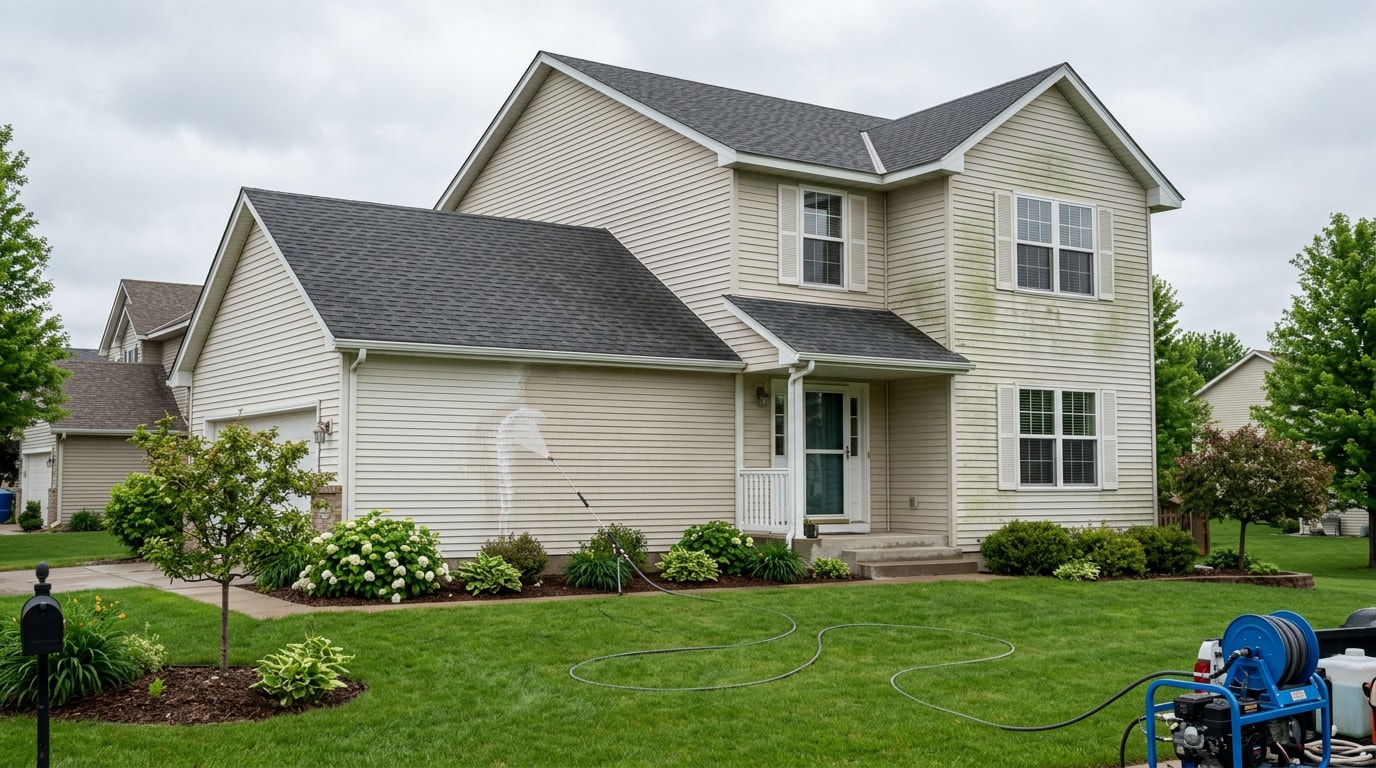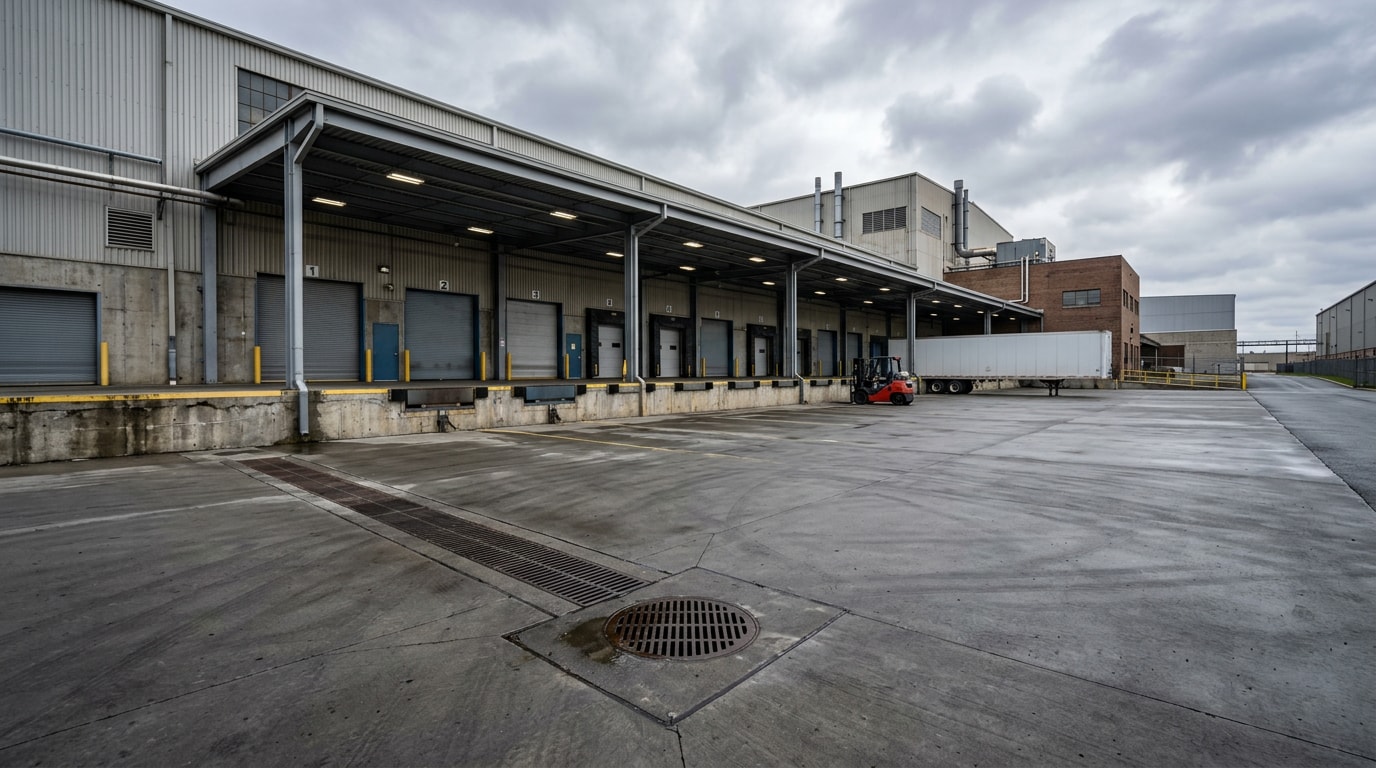
Industrial drain cleaning services in Eden Prairie, MN keep warehouses, manufacturing plants, and multi-tenant complexes running when a clogged line threatens to shut down operations. Industrial drains carry far more grease, sediment, and process waste than a household system, and they fail in ways a store-bought cleaner was never built to handle. One ignored floor drain can flood a production floor before a shift ends.
Key Takeaways
- Hydro jetting, mechanical snaking, and camera inspections diagnose and clear industrial-volume blockages that consumer tools can't touch.
- Minnesota facilities with industrial activity may need an NPDES/SDS industrial stormwater permit that covers catch basin and drain maintenance.
- Entering a sewer vault or drain pit falls under OSHA's permit-required confined space rule, not a DIY job for facility staff.
- Grease and FOG buildup is tied to a large share of reported sewer blockages nationally, making scheduled grease trap service a compliance issue, not just a convenience.
- Request a free estimate before a slow drain becomes an emergency shutdown.
Why Professional Drain Cleaning Matters for Eden Prairie Facilities
Chemical drain cleaners and consumer snakes rarely touch industrial-volume buildup from grease, mineral scale, or manufacturing residue. These lines move heavier loads than a kitchen sink ever will, and the tools sold at a hardware store weren't designed for that volume.
There's also a safety layer most property managers don't think about until it's relevant. Entering a sewer vault, drain pit, or other confined drain access point at an industrial facility falls under OSHA's Permit-Required Confined Spaces standard, which governs entry into spaces that are large enough for an employee to enter, have limited means of entry or exit, and are not designed for continuous occupancy, when those spaces also contain a serious hazard . Employers covered by the rule must maintain a written program that includes hazard evaluation, atmospheric testing procedures, entry permits, rescue procedures, monitoring protocols, and training requirements . That's not a liability a facility manager should hand to untrained staff or a one-truck operation without the right certifications. You can review the full standard directly from OSHA's 1910.146 page.
Types of Industrial and Commercial Drains We Service
Industrial and commercial properties contain several drain systems, and each one clogs in its own way.
- Main sewer lines and laterals struggle with sediment buildup and root intrusion, especially on older sections of pipe.
- Floor drains in production areas collect grit, oil, and process waste that settles fast under constant foot and equipment traffic.
- Utility-room drains clog from mineral scale that builds up slowly, then fails all at once.
- Grease-heavy kitchen lines in mixed-use buildings back up quickly without a maintenance schedule.
We work across office buildings, warehouses, light-industrial plants, and older facilities throughout Eden Prairie and the surrounding southwest metro.
Hydro Jetting vs. Mechanical Snaking
Two methods handle most of the work on an industrial line, and picking the wrong one costs more over time than it saves up front.
| Factor | Mechanical Snaking | Hydro Jetting |
|---|---|---|
| How it works | A motorized cable cuts and pulls through a localized clog | High-pressure water scours the full diameter of the pipe wall |
| Best for | Isolated clogs in branch lines, sinks, and smaller drains | Grease buildup, mineral scale, root intrusion, sediment-choked lines |
| Result | Punches a path through the blockage | Removes buildup along the entire pipe wall |
| Typical use case | Fast, lower-cost fix for a single clog | Long-term solution for recurring or facility-wide problems |
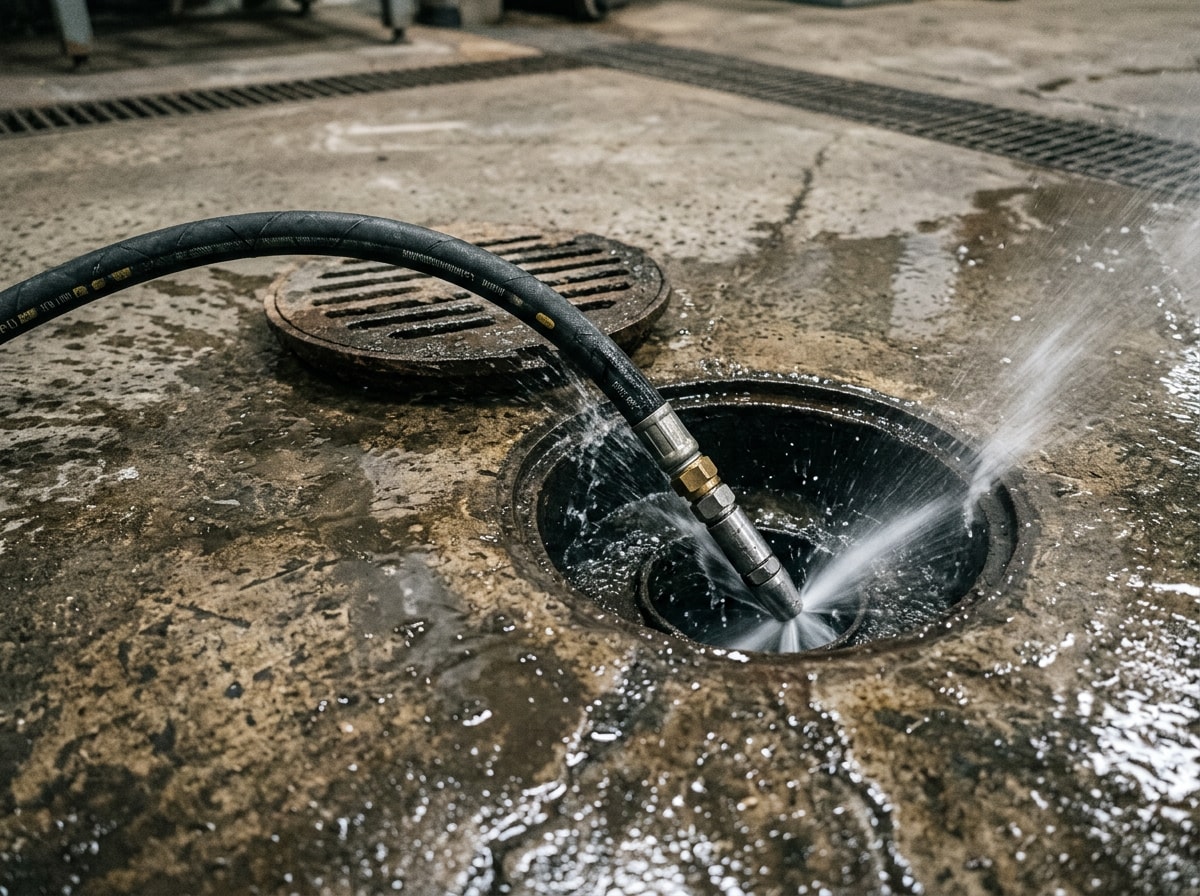
Snaking is faster and cheaper per visit, but it only opens a path through the blockage. Grease and scale left behind on the pipe wall regrow quickly, which is why the same drain keeps coming back on the maintenance calendar. Hydro jetting costs more up front because of the equipment and time involved, but it restores the pipe closer to its full diameter instead of leaving residue to re-clog in a few weeks.
We've pulled years of congealed grease out of a single floor drain trap in under an hour with a jetting unit, buildup a snake would have pushed aside without ever fully clearing.
Storm Drain and Catch Basin Maintenance for Industrial Lots
Large industrial properties with acres of pavement depend on clear catch basins to avoid flash flooding during heavy rain. Leaves, silt, and construction debris collect fast, and vacuum trucks combined with jetting equipment keep stormwater systems flowing the way they're designed to.
This isn't only a maintenance question in Minnesota, it's a regulatory one. Facilities operating under certain industrial activity codes must hold coverage under the state's 2025-2030 Industrial Stormwater Multi-sector General Permit, effective June 1, 2025 , and that permit requires ongoing inspection and maintenance of the stormwater conveyance system on site. The Minnesota Pollution Control Agency publishes the full compliance steps on its Industrial Stormwater program page, including what counts as applicable industrial activity and how sampling and annual reporting work. A clogged catch basin isn't just a flooding risk; it can put a permitted facility out of compliance.
Facilities that already schedule exterior maintenance often fold catch basin checks into routine gutter maintenance visits, since both systems fail for the same reason: debris nobody checked on for too long. For a closer look at how clogged exterior drainage affects a building below grade, our guide on window well cleaning and drainage protection covers the same principle on a smaller scale.
Grease Trap and FOG Compliance
Fats, oils, and grease, usually shortened to FOG, are one of the most common causes of backups in mixed-use industrial complexes with food-service tenants. The scale of the problem is bigger than most property managers assume: EPA data shows that grease from restaurants, homes, and industrial sources are the most common cause, at 47%, of reported blockages in sewer collection systems nationally.
Scheduled grease trap cleaning prevents sudden shutdowns and keeps commercial kitchen drains in line with local pretreatment requirements tied to the Pretreatment Program regulations that prohibit solid or viscous pollutants in amounts which will cause obstruction in the sewer system. Skipping a cleaning cycle to save a line item on the budget usually costs more in emergency response and downtime than the service itself.
Our Drain Cleaning Process
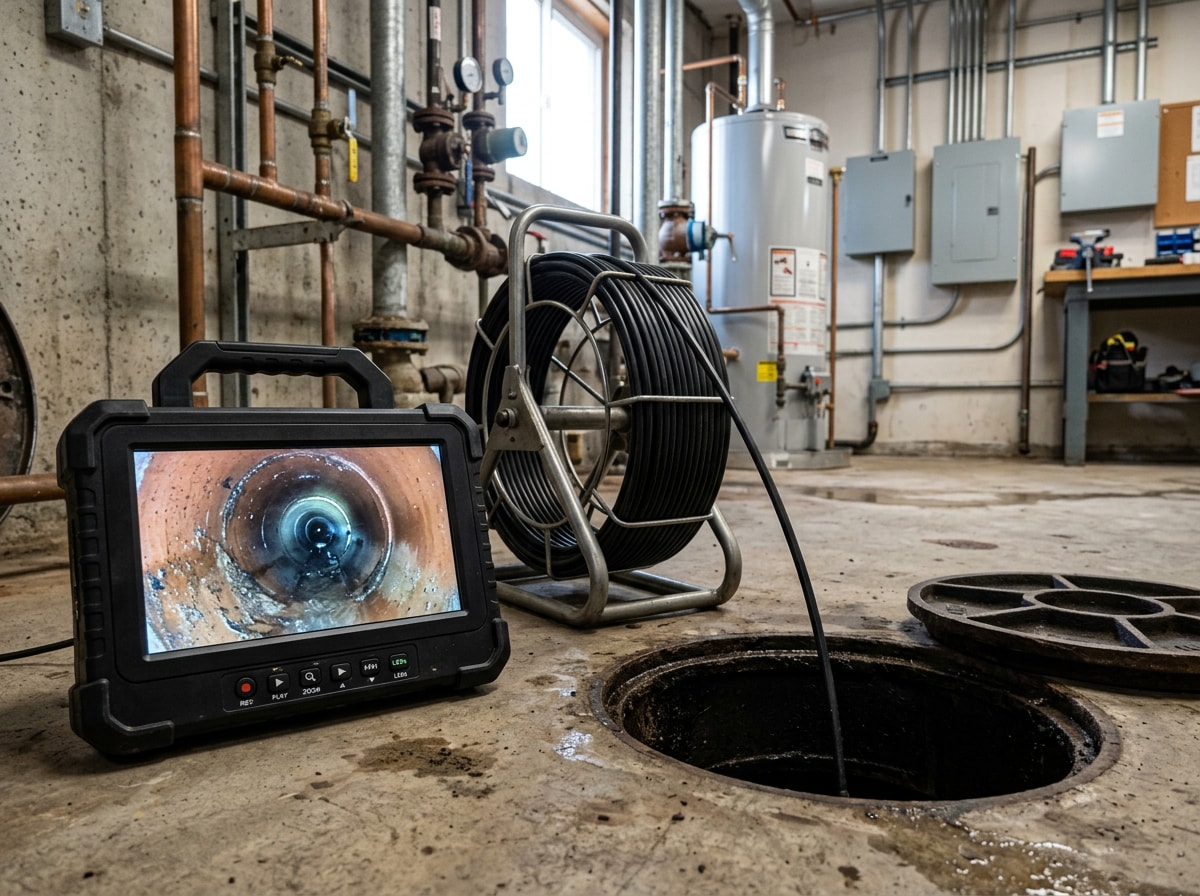
Every job starts with a video camera inspection to pinpoint the actual cause, whether that's roots, grease, scale, or a collapsed section of pipe. Guessing before cutting into a line wastes time and money.
- Diagnose the blockage with a camera to confirm what's actually causing the backup.
- Select the method, snaking for a localized clog or hydro jetting for buildup along the pipe wall.
- Clear the line with equipment matched to the pipe material and condition.
- Confirm full flow with a follow-up camera pass before the crew leaves the site.
Warning Signs Your Facility Needs Professional Attention
A few signs mean it's time to call for professional service rather than waiting out a slow drain:
- Multiple floor drains backing up at the same time
- A recurring clog that returns within weeks of being cleared
- Gurgling sounds throughout the building when water runs
- Any blockage located near the main sewer line
- Standing water in a catch basin after rain has stopped
Prevention Schedule by Facility Type
Maintenance frequency depends heavily on what runs through the drain, not just the size of the building.
| Facility Type | Recommended Inspection | Recommended Jetting |
|---|---|---|
| Office buildings | Annually | As needed, based on camera findings |
| Light-industrial / warehouse | Semi-annually | Annually, before winter |
| Food service / commercial kitchen | Quarterly | Quarterly to match grease trap pumping |
| Large paved lots with catch basins | Before and after heavy rain seasons | Vacuum and jet as debris accumulates |
Pairing hydro jetting on main lines with simple habits, like drain screens and scheduled gutter cleaning to keep roof runoff from overloading site drainage, cuts down on emergency calls significantly.
Our Service Area
We serve Eden Prairie and the surrounding southwest metro, including facilities managing multiple sites across Minnetonka and Eagan. Visit our homepage for full coverage details, or contact us directly to get a crew scheduled.
FAQ
Do you offer industrial and commercial drain cleaning in Eden Prairie, MN?
Yes. We provide commercial and industrial drain cleaning in Eden Prairie using hydro jetting, snaking, and camera diagnostics for facilities of every size.
How much does professional drain cleaning cost for a commercial or industrial property?
Cost varies by scope, pipe condition, and access. Industrial jobs typically run higher than residential work because of the equipment, time, and sometimes confined space protocols involved. Request a free estimate for a number specific to your facility.
How often should industrial drains be cleaned?
It depends on facility type. Light offices may need only annual service, while food-service and heavy-industrial sites often require quarterly maintenance to stay ahead of grease and sediment buildup.
What's the difference between hydro jetting and snaking?
Snaking punches a path through a clog with a motorized cable. Hydro jetting uses high-pressure water to scour the entire pipe wall, removing buildup instead of just opening a channel through it.
Is hydro jetting safe for older pipes?
Usually, but not always. A camera inspection before jetting confirms the pipe can handle the pressure. Older clay or deteriorating lines sometimes call for snaking instead to avoid further damage.
Why do my drains keep clogging even after I clear them?
Recurring clogs usually mean incomplete clearing from snaking alone, regrowing grease or scale on the pipe wall, or an underlying structural issue that only a camera inspection reveals.
Does my Minnesota facility need a permit for stormwater drain maintenance?
If your facility falls under an industrial activity classification, it likely needs coverage under the state's industrial stormwater general permit, which includes maintenance obligations for catch basins and other stormwater conveyance. Check your status on the MPCA's Industrial Stormwater program page.
Who is allowed to enter a sewer vault or drain pit at my facility?
Only personnel trained under OSHA's permit-required confined space rules, with atmospheric testing and a written entry permit completed first. This isn't a task for untrained facility staff.
Industrial drain problems rarely announce themselves until a line is already backing up onto a production floor or loading dock. Get a free estimate from a crew that treats camera diagnostics, hydro jetting, and stormwater compliance as part of the same job, not an upsell.