Window well cleaning services in Eagan, MN remove the leaves, silt, and standing water that build up around basement egress windows every fall and spring. A packed window well has nowhere to send runoff except through the window seal, which is how a clogged well turns into a wet basement overnight. Below is what the cleaning actually involves, what it costs in 2026, and the warning signs that mean you shouldn't wait until next season.
Why Eagan, MN Homes Need Window Well Cleaning
Eagan's older neighborhoods sit under a heavy canopy of oak, maple, and cottonwood, and nearly all of that leaf litter ends up blown into basement window wells by late October. Add winter ice, spring snowmelt, and clay-heavy soil, and a well that isn't cleared out will trap water against the foundation instead of draining it away.
The City of Eagan sees the same seasonal pattern on a larger scale. Warmer temperatures and spring showers mean more water, sometimes mixed with snow and ice, flowing into Eagan's stormwater system, and the city asks residents to help by clearing debris, ice dams, and snow from catch basins. The same snowmelt surge that threatens city storm drains is exactly what overwhelms a clogged residential window well.
A well that's actively failing usually shows a few clear signs before water ever reaches the basement floor:
- Standing water visible in the well more than a day after rain
- Leaves or mulch packed above the gravel line
- A musty smell near the basement window
- Visible gaps between the well and the foundation wall
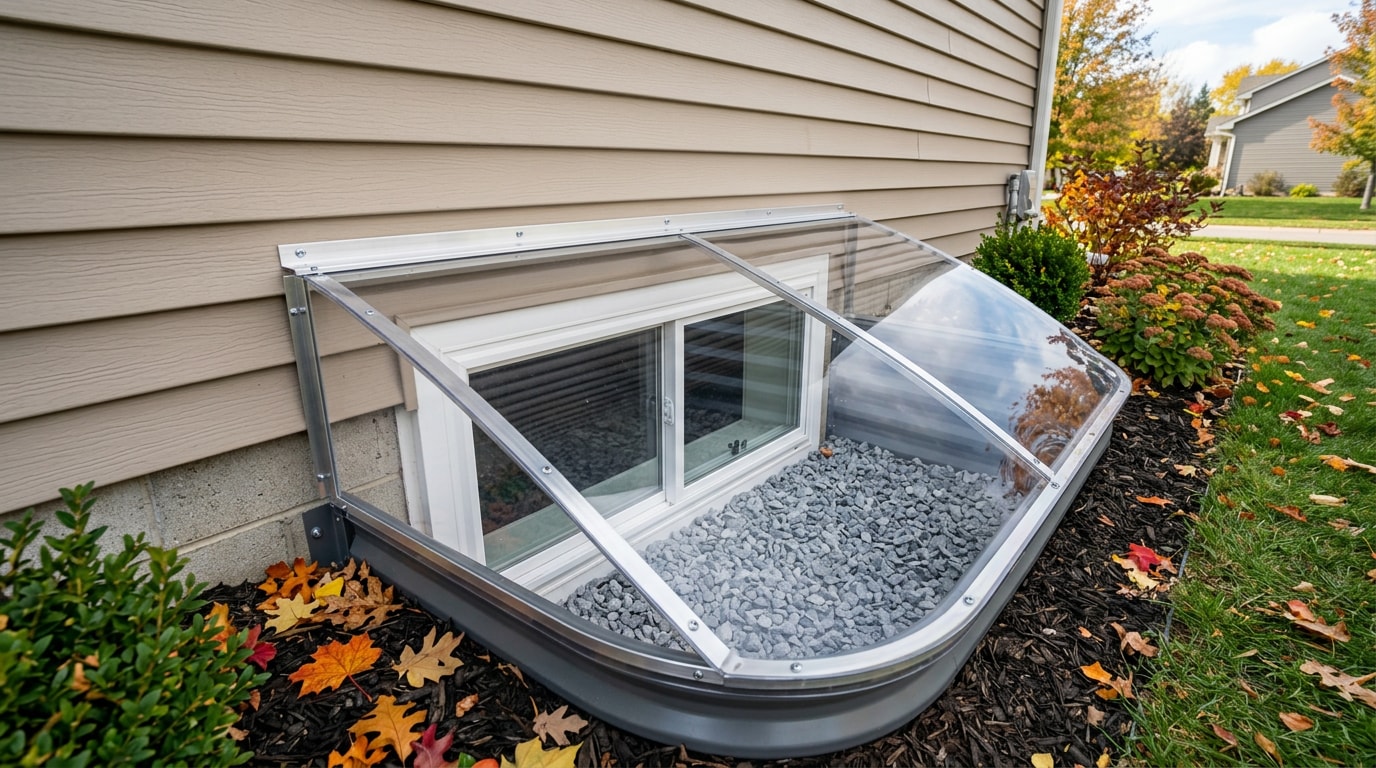
- A window well cover that's cracked, sagging, or missing entirely
What's Included in Professional Window Well Cleaning
A proper cleaning goes well beyond scooping out leaves. Our crews work through the same sequence on every job:
- Debris removal — leaves, seed pods, mulch, and trapped trash are pulled out by hand and bagged.
- Drain inspection — the well's drainage outlet is located and checked for silt or root intrusion.
- Drain flushing — a clogged drain line is cleared so water has somewhere to go.
- Gravel refresh — compacted or buried gravel is topped off to restore proper filtration.
- Cover check — covers are inspected for cracks, gaps, or improper fit and replaced if needed.
- Window and frame rinse — the glass, track, and sill are rinsed to remove grime and staining.
Minnesota Window Well Code Basics You Should Know
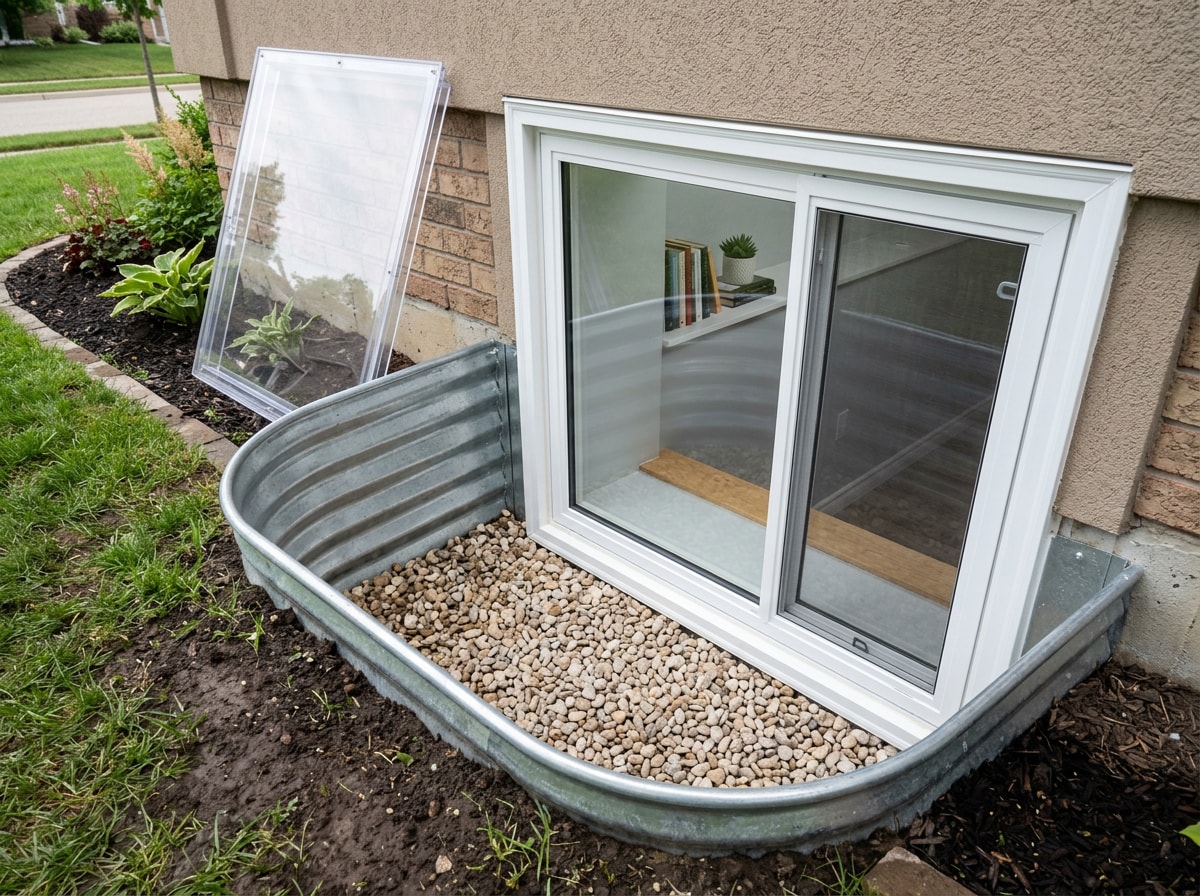
Most homeowners never see the actual code their window well was built to, but it explains why size and drainage matter so much. Minnesota's egress rules aren't a local quirk; they come straight from the state-adopted residential code. Escape and rescue windows with a finished sill height below the adjacent ground elevation must have a window well, and window wells at escape or rescue windows must provide a minimum accessible net clear opening of 9 square feet with a minimum dimension of 36 inches in each direction.
That sizing requirement is also why a neglected well causes problems faster than most people expect. A well built to minimum dimensions holds very little buffer volume before water starts climbing the glass.
Window Well Cleaning Cost in Eagan, MN (2026)
Pricing depends on the number of wells, how deep they are, and how long they've gone untouched. These are typical ranges for Eagan-area homes in 2026:
| Service Scope | What's Included | Typical Price Range |
|---|---|---|
| Single well, routine maintenance | Debris removal, drain check | $45–$75 |
| Whole-home package (3–5 wells) | Debris removal, drain flush, gravel top-off | $150–$300 |
| Severely neglected well | Deep debris removal, drain clearing, gravel replacement | $100–$200 per well |
| Window well cover installation | Measured, fitted, secured cover | $80–$180 per well |
Most Eagan homeowners bundle this with a seasonal gutter cleaning visit, since both jobs are driven by the same falling leaves. If you're also budgeting for interior upkeep this year, our house cleaning cost guide for Edina, MN breaks down comparable 2026 pricing for the inside of the home.
DIY vs. Professional Window Well Cleaning
A shallow, easy-to-reach well is a reasonable DIY task. Deeper wells, or ones with a failed drain, are a different story.
DIY makes sense when:
- The well is shallow and accessible without a ladder
- You're only removing surface leaves, not excavating buried gravel
- There's no standing water or visible drain failure
Call a professional when:
- The well is more than 44 inches deep (ladder-depth territory under Minnesota egress code)
- Water is standing for more than 24 hours after rain
- You suspect the drain line itself is collapsed, root-clogged, or disconnected
- The cover is damaged and needs proper refitting
How Clogged Window Wells Lead to Basement Moisture and Mold
Standing water in a window well doesn't stay contained. It presses against the window seal, seeps along the frame, and eventually reaches drywall, insulation, or flooring. The key to mold control is moisture control , according to the EPA, which is exactly why a clogged well matters more than it looks. Once wet building materials sit undisturbed, mold has everything it needs to establish itself behind a wall most homeowners can't see.
Clearing the well before water reaches that point is far cheaper than drying out a basement afterward.
Pairing Window Well Cleaning With Gutter and Roof Maintenance
Window wells, gutters, and roofs all fail for the same reason: trapped debris blocking water from moving where it's supposed to go. We typically recommend servicing all three together, especially heading into a Minnesota winter.
- Gutter Cleaning clears the leaves before they ever reach your window wells
- Gutter Maintenance keeps downspouts and seams functioning between full cleanings
- Window Cleaning finishes the job with a streak-free glass and frame rinse
- Roof Washing removes the moss and algae that shed debris into gutters and wells below
- Pressure Washing Services cover driveways, siding, and walkways that collect the same seasonal grime
After years of fall service calls across Dakota County, our crews consistently find the same pattern: homes that skip a season of gutter and window well cleaning show up on our schedule again in spring with a wet basement complaint. Catching it in October is always the cheaper visit.
Service Area
We clean window wells, gutters, and exteriors throughout Eagan and the surrounding south metro, including Burnsville, Lakeville, Eden Prairie, Prior Lake, Edina, Minnetonka, and Wayzata. Check our Eagan, MN service area page to confirm coverage for your address, or browse recent projects to see completed work nearby.
Ready to get your window wells cleared before the next storm? Get a free estimate and we'll put together a quote based on your home's number of wells and current condition. You can also start from our homepage to see the full range of exterior services we offer across the Twin Cities south metro.
FAQ
How often should window wells be cleaned in Minnesota?
Twice a year covers most Eagan homes: once in late fall after leaves drop, and once in early spring after snowmelt. Homes under heavy tree cover sometimes need a mid-season check as well.
What's included in window well cleaning?
Debris removal, a drain inspection and flush, a gravel top-off, and a check of the well cover are the standard steps. Window glass and frame rinsing is usually included in the same visit.
Do window wells need a drain?
Yes. Minnesota's residential code requires a window well connected to the foundation drainage system or an approved alternative, since a well with no outlet simply fills up and holds water against the window.
How much does window well cleaning cost in Eagan, MN?
Most single-well cleanings run $45–$75, while a whole-home package covering several wells typically falls between $150–$300. Severely neglected wells with drain problems cost more due to the extra labor.
Can a clogged window well cause basement flooding?
Yes. Once a well fills faster than it drains, water presses against the window seal and finds the path of least resistance, which is usually straight through the frame into the basement.
Should I install a window well cover?
A cover is one of the cheapest ways to prevent this problem entirely. It blocks leaves and most rainfall while still allowing light through, and it's especially worthwhile on wells near large trees.