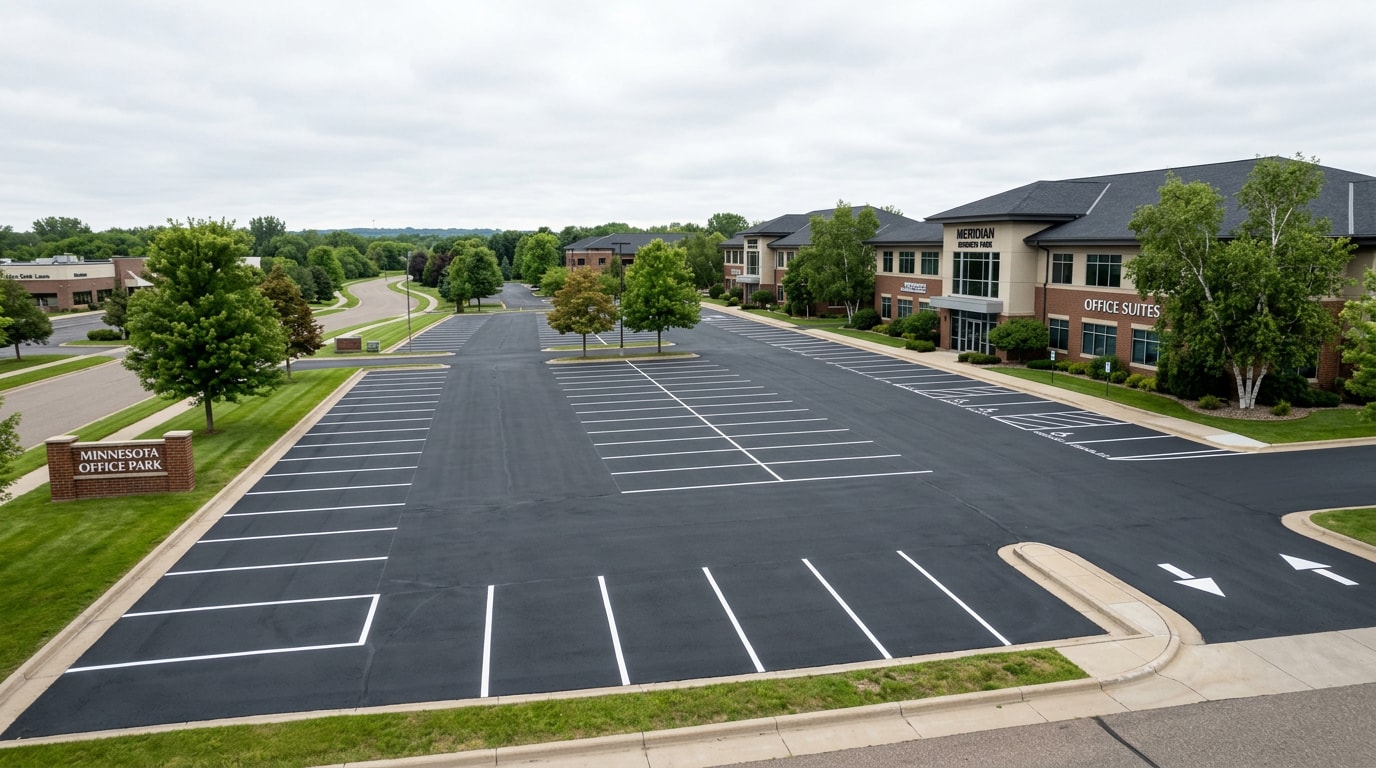
Parking lot cleaning services in Minnetonka, MN keep retail centers, medical offices, and HOA lots free of oil, road salt, and gum before they stain pavement or become a slip hazard. Minnesota's freeze-thaw winters and heavy de-icing load lots with grit that routine sweeping can't fully lift. Elevate Property Maintenance builds a cleaning schedule around your property's actual traffic, not a generic calendar, and handles the stormwater side of the job correctly from the first visit.
What's Included in Professional Parking Lot Cleaning
A complete service covers more than a quick rinse. Most Minnetonka jobs include:
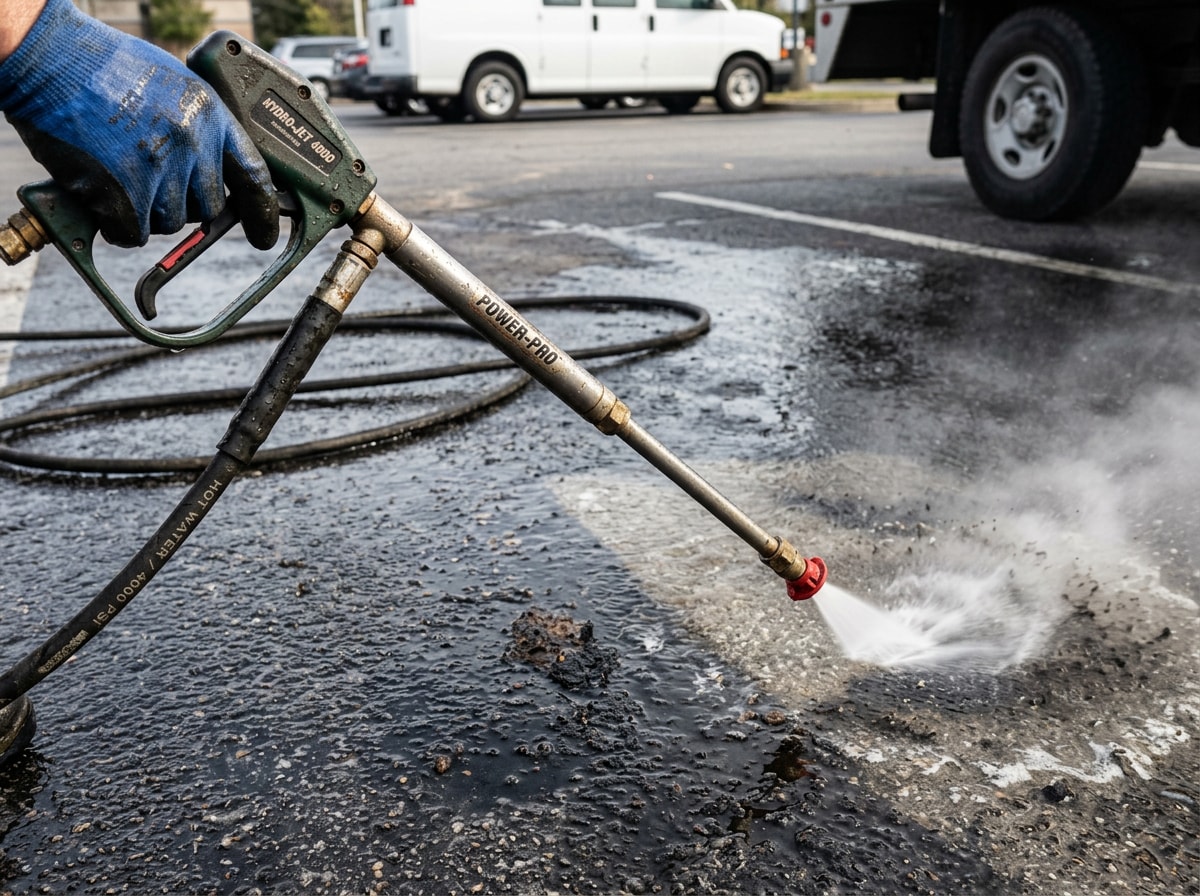
- Hot-water pressure washing of drive lanes, stalls, and loading areas
- Spot treatment for oil, transmission fluid, and tire marks
- Gum and tar removal from high-traffic walkways
- Sidewalk, curb, and building entrance cleaning
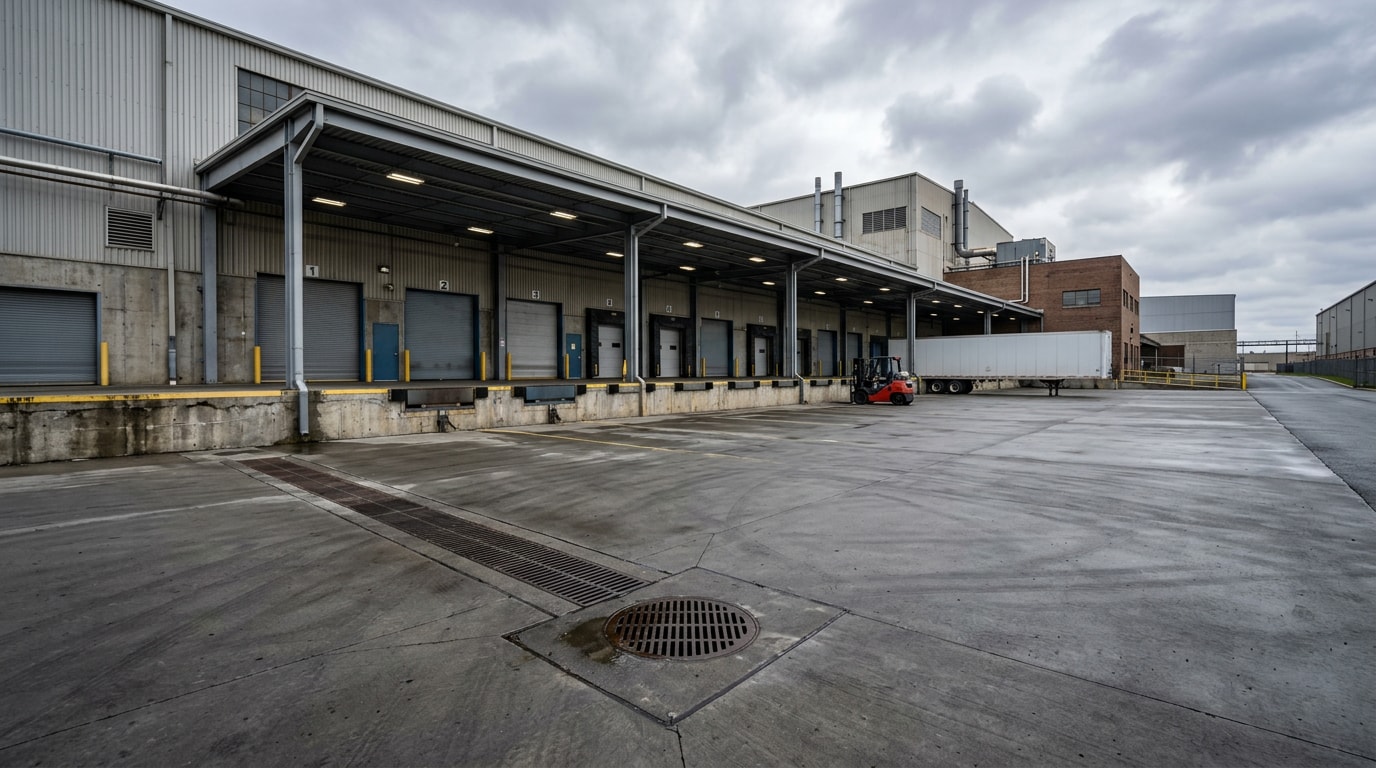
- Dumpster pad and drive-thru degreasing
- Low-pressure technique near fresh striping and sealcoat
This work pairs naturally with our broader pressure washing services, and many property managers bundle it with driveway cleaning for the full approach and entrance combined.
How Often Minnetonka Parking Lots Actually Need Cleaning
There's no single right answer. Frequency depends on tenant mix, traffic volume, and what the pavement sits next to. Industry sweeping guidance from the North American Power Sweeping Association frames it as an asset-protection question as much as an appearance one, noting that frequent sweeping can decrease the frequency of expensive resurfacing and repairs, and a property manager who sweeps regularly can sometimes skip a year between striping and sealing the lot .
| Property Type | Suggested Cleaning Frequency |
|---|---|
| Retail centers / strip malls | Quarterly, more often near food tenants |
| Medical and office parks | Two to four times per year |
| HOA and apartment lots | Twice yearly, plus a post-winter deep clean |
| Industrial / loading areas | Three to four times per year |
Winter is the variable Minnetonka adds to this equation. Salt and sand tracked in from November through March build up fast, and a spring cleaning pass after the thaw catches most of that residue before it etches the surface further.
Minnetonka's Climate Problem: Salt, Algae, and Freeze-Thaw
Two separate issues show up on local lots every year, and they need different fixes.
Salt and sand buildup. Road salt is abrasive and corrosive. Left on asphalt or concrete through repeated freeze-thaw cycles, it accelerates surface pitting and speeds up the need for sealcoating.
Algae in shaded, low-drainage spots. Parking structures and lots with tree cover or poor drainage develop green film in damp corners. University extension research on algae growth on hard surfaces confirms that these growths commonly occur on moist, shady locations such as decks, pavement, and roofs , and that algae and mosses on sidewalks or other hard surfaces make them slippery, perhaps unsightly, and unsafe for walking . Hot-water pressure washing with the right dwell time removes both the organic growth and the slip risk without damaging the surface.
Our Process: From Assessment to Stormwater-Safe Cleanup
- Property assessment. We check surface type (asphalt vs. concrete), soil level, and drainage points before choosing pressure, temperature, and cleaning agent.
- Scheduling around your hours. Lots that never fully close get section-by-section cleaning or off-hours work instead of a full shutdown.
- Pre-clean prep. Vehicles are relocated, storm drains are covered, and landscaping near the cleaning zone is protected.
- Cleaning. Hot-water pressure washing lifts oil, salt residue, gum, and algae without over-saturating the base.
- Wash-water containment. Runoff is captured rather than pushed toward a storm drain.
That last step matters more in Minnetonka than in most cities. The property sits inside four separate watershed districts, and the city's stormwater program exists specifically because rainwater and snowmelt pick up pollutants as they flow over rooftops, driveways, walkways, parking lots and other hard surfaces , which the municipal separate storm sewer system permit is designed to limit. Crews working commercial lots here need to manage wash water accordingly, not just rinse and leave.
Why Minnetonka Property Managers Choose Elevate Property Maintenance
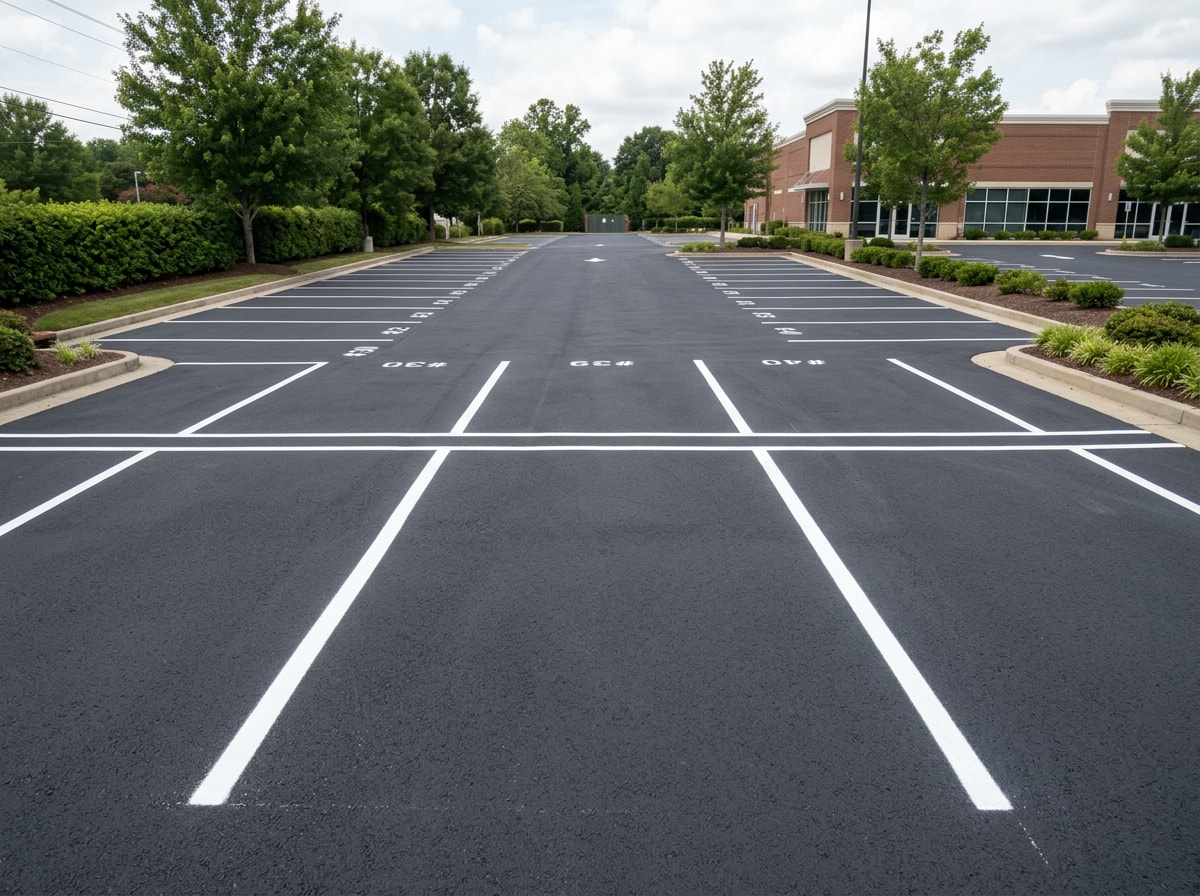
On a recent multi-building office park job off a shaded commercial corridor, the heaviest staining wasn't in the general parking stalls. It was concentrated at the drive-thru approach lane and the loading dock apron, where idling vehicles and delivery trucks drip fluid in the same few feet, visit after visit. That's a pattern worth flagging to any manager building a cleaning budget: the stalls look fine from a distance, but the choke points need attention first.
You can see examples of completed commercial work on our projects page, and get a free estimate before the next freeze-thaw cycle adds more damage to stained pavement.
Complete Exterior Maintenance Beyond the Lot
Parking lot cleaning rarely stands alone. Most Minnetonka properties pair it with:
- Driveway sealing to protect freshly cleaned asphalt against the next winter
- Asphalt sealing for lots showing early surface wear
- Gutter cleaning so roof runoff isn't adding more debris to a freshly washed lot
If your facility includes medical or office tenants, our write-up on medical office cleaning services in Eden Prairie covers how interior and exterior maintenance schedules often overlap on those properties.
Service Areas Near Minnetonka
We clean commercial lots throughout the western metro, including Minnetonka, Wayzata, Eden Prairie, and Edina. Visit our homepage for the full list of services and coverage.
FAQ
How often should commercial parking lots be pressure washed in Minnetonka?
Most retail lots need quarterly cleaning, office and medical parks do well with two to four visits a year, and HOA or apartment lots typically fit a twice-yearly schedule plus a post-winter deep clean. Traffic volume and tenant type move that number up or down.
Can you remove old oil stains from asphalt or concrete?
Fresh stains come out easily with a degreaser pre-treatment and hot water. Concrete responds better than porous asphalt, and very old, deep-set stains may lighten significantly rather than disappear completely.
Do we need to close the lot or move vehicles before you clean it?
Vehicles need to be off the section being cleaned. For properties that never fully close, we use off-hours scheduling or section-by-section cleaning so the whole lot never has to shut down at once.
Can you also clean our sidewalks and building entrances?
Yes. Sidewalks, curb areas, and entrances usually get bundled into the same visit since they collect the same salt, gum, and dirt as the lot itself.
Where does the wash water go, and is it compliant with local stormwater rules?
Wash water is contained and kept out of storm drains rather than left to run off. Minnetonka sits within multiple watershed districts and operates under an MS4 stormwater permit, so crews working here need to manage runoff properly, not just rinse and move on.
How much does parking lot cleaning cost in Minnetonka?
Cost depends on square footage, staining severity, and how often the lot has been maintained. A small office lot costs far less than a multi-acre retail center with years of built-up oil and salt. Request a free estimate for an exact number.
What's the difference between sweeping and pressure washing a parking lot?
Sweeping removes loose debris, litter, and surface sand. It does not lift embedded oil, salt residue, or algae staining. Pressure washing handles the buildup sweeping leaves behind, which is why most commercial properties use both on different schedules.